


From Estimate to Finish Line: What Happens During Your Paving Project?
Starting a paving project can raise plenty of practical questions. How long will your driveway or parking lot be unavailable? What happens before asphalt goes down? What should you expect from the crew?
For property owners in Murfreesboro, TN, understanding the process is especially useful because Middle Tennessee weather, drainage, soil conditions, and everyday traffic can all affect how a paved surface should be prepared and installed.
Quick answer: A typical paving project moves from an initial site evaluation and estimate through planning, site preparation, base work, asphalt placement, compaction, and final inspection. The exact steps depend on whether you are installing new pavement, replacing an existing surface, or completing another type of asphalt project. Good preparation is particularly important in Rutherford County, where drainage and changing weather conditions can influence pavement performance.
What Murfreesboro property owners should know
-
The estimate is the starting point for identifying the scope of work, existing pavement conditions, access concerns, and other site-specific needs.
-
Proper preparation matters because the finished asphalt surface depends heavily on the condition and stability of what is underneath it.
-
Drainage deserves attention in Middle Tennessee because rainwater that collects around or beneath pavement can contribute to deterioration.
-
Access may be temporarily restricted while paving and compaction are underway, so homeowners and businesses should plan ahead.
-
A professional paving project should include a final review of the completed surface before the job is considered finished.
Why Does the Paving Process Matter in Murfreesboro?
The paving process matters in Murfreesboro because asphalt must handle local traffic, rainfall, summer heat, seasonal temperature changes, and the conditions beneath the pavement. A good-looking surface is only one part of the job. Preparation, drainage, installation, and compaction all contribute to how the pavement performs after the crew leaves.
Properties around Rutherford County can vary considerably. A residential driveway near Blackman may have different traffic and drainage needs than a commercial parking area closer to downtown Murfreesboro or the Medical Center Parkway corridor.
Priority Paving approaches each paving project according to the conditions and scope of that particular property. From this point forward, we will walk through what you can generally expect from the first estimate through completion.
What Happens During the Initial Paving Estimate?
The initial paving estimate is when the property and proposed work are evaluated so the scope of the project can be defined. This stage gives property owners an opportunity to discuss what they need while allowing us to look at the conditions that may influence the work.
Depending on the project, relevant considerations can include the existing pavement, the area to be paved, vehicle access, drainage, edges, transitions, and the condition of the underlying surface.
This is also the right time to discuss practical concerns. A business near Middle Tennessee State University, for example, may need to think carefully about customer or employee access. A homeowner may need to plan where vehicles will be parked while driveway work is underway.
The goal is to understand the site before paving begins rather than trying to solve avoidable problems after asphalt is placed.
What Happens After You Approve the Paving Project?
After a paving project is approved, the next step is planning the work around the site’s requirements, access, preparation needs, and suitable working conditions. Property owners should know what areas need to remain clear and prepare for temporary changes in vehicle or pedestrian access.
Weather can influence scheduling. Murfreesboro experiences hot summers as well as periods of rain and changing seasonal conditions, so outdoor paving work has to be approached with actual site and weather conditions in mind.
Before work begins, move vehicles and other personal property away from the designated work area as instructed. Businesses may also need to communicate temporary parking or access changes to employees, customers, tenants, or vendors.
How Is the Site Prepared for Asphalt Paving?
Site preparation creates the stable, properly shaped foundation needed before the asphalt surface is installed. The exact preparation varies by project, especially when comparing a new installation with replacement or work involving an existing paved surface.
Preparation can involve removing unsuitable existing material, establishing the required grade, addressing the base, and getting the area ready for asphalt placement. The specific work should reflect what is actually found at the property.
This stage is easy to overlook because much of the finished preparation will eventually be covered. Yet what lies beneath the asphalt is critical to the pavement system.
That is especially relevant for local properties where water movement or unstable underlying conditions may create trouble. Simply covering a problem with new material does not necessarily address what caused the deterioration.
Why Are the Base and Drainage So Important?
The base and drainage are important because pavement needs stable support while water needs a way to move away from vulnerable areas. Problems below the surface can eventually show themselves above it through settlement, cracking, depressions, or other forms of deterioration.
Middle Tennessee receives precipitation throughout the year, which makes drainage an important site consideration. Low areas that repeatedly collect water deserve attention before a new paved surface is completed.
Grading is also part of the bigger picture. Water should not simply be directed toward another problem area, particularly around buildings, neighboring property, sidewalks, or other paved sections.
For properties near areas such as Stones River or lower-lying portions of Rutherford County, site-specific drainage conditions should be evaluated rather than relying on a one-size-fits-all paving plan.
What Happens When the Asphalt Is Installed?
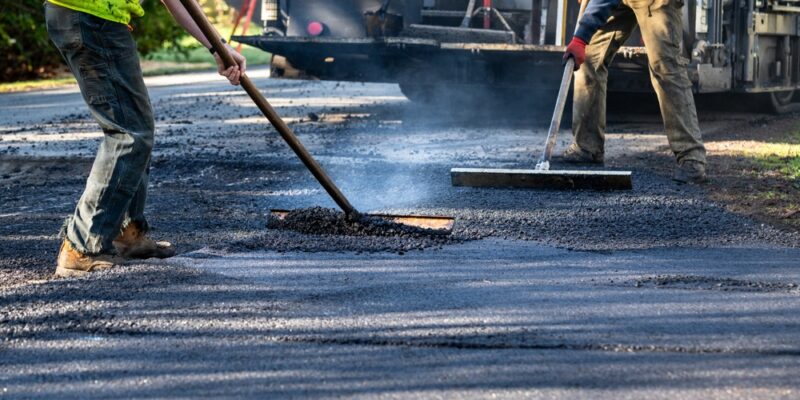
Asphalt installation involves placing paving material over the prepared area and shaping it to create the planned surface. The crew works systematically across the project while paying attention to grade, transitions, edges, and the overall configuration of the paved area.
This is the stage most people picture when they think about paving, but it comes after the less-visible preparation work.
For a residential driveway, installation must account for connections to areas such as the street, garage, or existing pavement. Commercial projects can involve additional considerations, including larger traffic areas and connections between parking, drive lanes, entrances, and surrounding surfaces.
The specific installation approach depends on the project rather than a universal paving formula.
Why Is Asphalt Compaction Part of the Project?
Asphalt compaction is part of the paving process because newly placed material must be consolidated into a dense, finished pavement surface. Specialized paving equipment is used as the material is placed and compacted across the work area.
Compaction is not simply a cosmetic finishing step. It is part of constructing the pavement itself.
Property owners may see several pieces of equipment moving over the same general area during installation. That does not necessarily mean work is being repeated. Different stages of placement and compaction can require multiple passes as the crew completes the surface.
Once this stage is finished, the project begins to look much more like the driveway, parking lot, or paved area the property owner expected.
What Should You Look for During the Final Walkthrough?
The final walkthrough should confirm that the planned paving work has been completed and give the property owner an opportunity to ask questions about the finished surface. This is also when any instructions about access or initial care should be communicated.
Look at the overall paved area rather than focusing only on its color. Transitions, edges, drainage direction, access points, and the relationship between the new pavement and surrounding surfaces are all worth reviewing.
For a Murfreesboro business, this is also a good time to confirm how and when normal property access can resume. Homeowners should likewise follow the instructions provided for vehicle use after the work.
What Warning Signs Suggest Your Existing Pavement Needs Attention?
Pavement may need professional attention when cracking, potholes, standing water, settlement, or widespread surface deterioration begins interfering with normal use. Not every imperfection requires complete replacement, but visible changes can help identify when an evaluation makes sense.
Watch for:
-
Cracks that are spreading or becoming more numerous.
-
Potholes or areas where pavement material is breaking apart.
-
Depressions where water repeatedly collects after Middle Tennessee rain.
-
Uneven or settled sections that affect driving or walking.
-
Deterioration along pavement edges.
-
Areas that appear to be sinking or shifting.
-
Repeated damage in the same location despite previous attention.
These signs do not diagnose the underlying problem by themselves. A site evaluation can help determine what is happening and what type of paving work may be appropriate.
When Should You Call a Professional Paving Contractor?
You should call a paving professional when deterioration is widespread, drainage is contributing to damage, the surface has become difficult to use, or you are planning a new paved area. A professional evaluation is also useful when you cannot tell whether an existing surface needs targeted work or more extensive replacement.
Property owners can safely monitor small changes and keep paved areas clear of debris. Drainage patterns can also be observed after rain.
Excavation, grading, base correction, and asphalt installation are different. Those jobs require appropriate equipment and an understanding of how the entire paved area needs to function.
For properties in Murfreesboro and surrounding Rutherford County communities, addressing underlying conditions before installing the final surface can be more useful than concentrating only on what is visible from above.
What Common Conditions Can Affect Pavement in Rutherford County?
Common conditions affecting Rutherford County pavement include water, traffic, heat, seasonal weather changes, and problems with the supporting material beneath the asphalt. The significance of each condition varies by property, which is why an on-site evaluation matters.
Water is a major consideration because poor drainage can expose pavement and underlying materials to repeated moisture.
Traffic also matters. A family driveway near Barfield may experience very different loading than a commercial property along Broad Street.
Summer heat exposes asphalt surfaces to high temperatures, while seasonal temperature changes add another source of environmental stress. The pavement also depends on the stability of its supporting layers, so movement or weakness beneath the surface can eventually become visible above it.
How Can You Help Maintain a Paved Surface?
You can help maintain pavement by keeping it clean, watching for drainage problems, monitoring developing damage, and addressing concerns before they become more extensive. Regular observation is simple, but it can help Murfreesboro property owners notice changes before pavement becomes difficult or unsafe to use.
After significant rain, look for areas where water remains on the pavement. Keep drainage paths and pavement edges clear of debris when it is safe to do so.
Periodically look for new cracks, depressions, edge deterioration, or loose material. Commercial property managers should pay particular attention to heavily traveled entrances and drive lanes.
DIY maintenance should stop when the problem involves structural movement, significant pavement failure, grading, or base conditions. Those issues call for professional evaluation.
What Results Should You Expect From a Professional Paving Project?
A professional paving project should leave you with a completed surface suited to the agreed project scope and the property’s intended use. Results vary according to site conditions, preparation requirements, drainage, traffic, existing pavement, and the type of paving work performed.
Property owners should have realistic expectations. Asphalt is a durable paving material, but no outdoor surface is unaffected by weather, traffic, water, or time.
The objective is to complete the appropriate preparation and paving work for the property rather than promise that pavement will never require future maintenance.
What Are Common Paving Project Mistakes?
Common paving mistakes involve overlooking preparation, ignoring drainage, failing to plan for access, or choosing a solution before understanding why the existing pavement failed. Avoiding those mistakes can make the entire process easier for local homeowners and businesses.
Mistake: Focusing only on the top surface.
Consequence: Underlying problems may remain unaddressed.
Better approach: Evaluate the existing pavement and supporting conditions before determining the scope.
Mistake: Ignoring standing water.
Consequence: A drainage concern can continue affecting the paved area.
Better approach: Consider how water moves across and around the site before paving.
Mistake: Forgetting about property access.
Consequence: Vehicles, deliveries, employees, or family members may be inconvenienced unexpectedly.
Better approach: Plan parking and access before the scheduled work begins.
Mistake: Treating every damaged pavement area the same way.
Consequence: The selected work may not address the actual condition.
Better approach: Have the pavement evaluated and choose the service according to what the site needs.
What Is a Common Murfreesboro Paving Scenario?
A common Murfreesboro paving scenario involves a property owner with an aging driveway or parking area that has developed cracking, uneven sections, or locations where rainwater collects. This is an illustrative local scenario, not a Priority Paving case study or a description of a specific customer project.
The owner may initially focus on getting a fresh surface. During an evaluation, however, the condition of the existing pavement, drainage, transitions, and underlying support also need consideration.
The appropriate project then depends on those site conditions. This is why the estimate and preparation stages matter just as much as the moment when new asphalt becomes visible.
What Paving Solutions May Be Appropriate?
The appropriate paving solution depends on the existing surface, the intended use of the area, and what the site evaluation reveals. Some properties need a new paved area, while others may require work involving existing asphalt and its supporting structure.
Our role is to evaluate the project and discuss the paving work that fits the conditions found on site. Residential and commercial properties can have different needs based on traffic, access, drainage, layout, and surrounding surfaces.
How Do You Compare Your Paving Options?
The best way to compare paving options is to consider whether each choice addresses the actual condition of the pavement rather than simply improving its immediate appearance. The lowest-effort option is not automatically the right solution if deterioration extends beneath the visible surface.
Minor conditions may call for a different approach than widespread deterioration or a pavement area with base and drainage concerns. New installations introduce another set of preparation requirements.
A professional evaluation helps connect the proposed work to what is happening at the property. That is more useful than selecting a paving approach based only on how another driveway or parking lot was handled.
Where Does Priority Paving Provide Local Paving Services?
Priority Paving serves property owners in Murfreesboro, with individual project availability depending on the requested location and scope of work. For service outside the primary area, including nearby Rutherford County communities such as Smyrna or La Vergne, confirm current service availability when requesting an estimate.
What Can Happen If You Put Off Pavement Problems?
Putting off pavement problems can allow cracking, water-related deterioration, potholes, or uneven areas to become more extensive over time. The exact progression depends on the cause, but Murfreesboro weather and regular vehicle traffic do not stop affecting a damaged paved surface while you wait.
Waiting can also make everyday use less convenient. For commercial properties, deteriorated pavement may affect parking and traffic areas. At home, potholes, uneven sections, and drainage problems can make a driveway harder to use.
An evaluation can help you understand the current condition before deciding how quickly work needs to be completed.
Frequently Asked Questions About Paving Projects in Murfreesboro
How long does a paving project take in Murfreesboro?
The project timeline depends on the size, scope, preparation requirements, site access, and weather conditions. A straightforward residential project and a larger commercial paving job will not necessarily follow the same schedule. Your estimate is the appropriate time to discuss anticipated scheduling and how long access may be affected.
Does rain affect asphalt paving in Murfreesboro?
Yes, rain and wet site conditions can affect paving work and project scheduling. Asphalt projects require suitable conditions for preparation, placement, and compaction. Because Middle Tennessee weather can change, property owners should understand that scheduling may need to account for actual conditions at the job site.
Why is drainage important for a Rutherford County paving project?
Drainage is important because water that repeatedly collects on or around pavement can contribute to deterioration and may indicate grading concerns. Before paving, the site should be considered as a whole so the finished area works with existing buildings, surrounding pavement, landscape features, and established drainage patterns.
Do I need to move my vehicles before driveway paving?
Yes, vehicles should be removed from the designated work area before paving begins and parked where they will remain accessible during the project. Follow the instructions provided for your specific job. Planning ahead is especially helpful when the driveway provides the property’s only practical vehicle access.
Can you pave over damaged asphalt?
Whether work can be performed over existing asphalt depends on the condition of that pavement and what is causing the damage. Significant failure, settlement, drainage problems, or unstable supporting material may require a different approach. The existing surface should be evaluated before deciding how the project will be completed.
How should Murfreesboro businesses prepare for a parking lot paving project?
Businesses should plan for temporary changes to parking, deliveries, employee access, and customer traffic before work starts. The details depend on the layout and project scope. Properties near busy commercial areas should consider how vehicles will enter, exit, and park while portions of the site are unavailable.
When can I drive on newly paved asphalt?
The appropriate time to drive on newly paved asphalt should come from the paving crew based on the conditions and work performed. Do not assume the surface is ready simply because installation appears complete. Follow the project-specific access instructions provided after paving and compaction are finished.
Should I get an estimate before my Murfreesboro pavement becomes severely damaged?
Yes, an estimate can be useful before pavement problems become severe because it gives you information about current conditions and possible next steps. Cracking, standing water, potholes, settlement, and deteriorating edges are reasonable signs that it may be time to have the paved area evaluated.
Take Your Murfreesboro Paving Project From Estimate to Finish Line
A paving project is more than the day asphalt arrives. Evaluation, planning, preparation, drainage considerations, installation, compaction, and the final review all contribute to the finished result.
For Murfreesboro property owners, understanding those stages makes it easier to plan ahead and ask useful questions before work begins.
Get a Paving Plan Built Around Your Property
We can evaluate your paving needs and explain the next steps based on the conditions at your property.
Categorised in: Paving